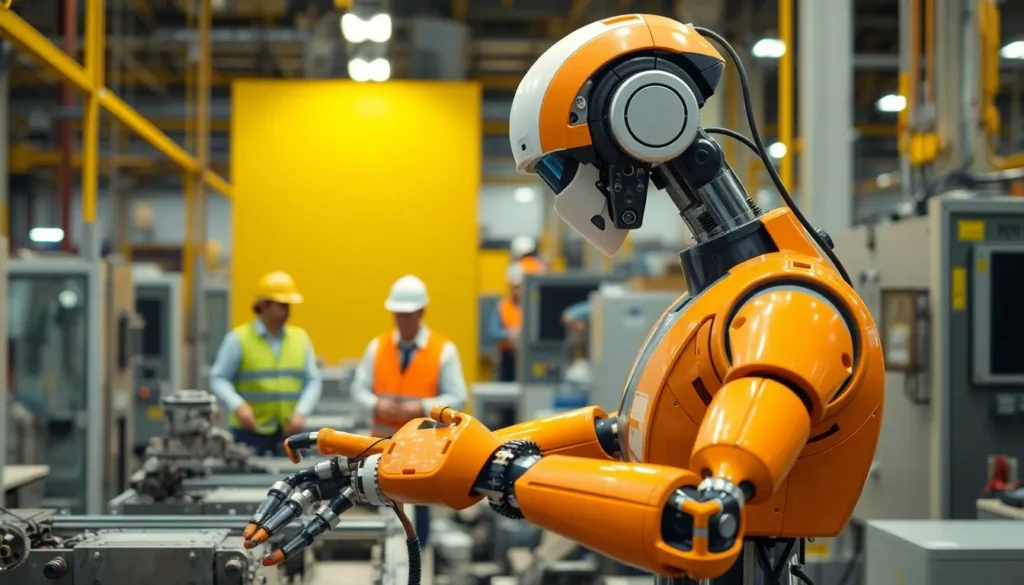

Robotics And Autonomous Systems: Revolutionizing Our World
Ever thought about how convenient life has become thanks to the magic of robotics? We’re talking about everything from those friendly vacuum bots that clean our floors while we binge-watch our favorite series to autonomous vehicles zooming around town. Robotics and autonomous systems are not just futuristic dreams: they’re actively redefining our lives today. So buckle up as we jump into this fascinating realm, exploring the ins and outs of these incredible technologies, complete with a sprinkle of humor and a dash of insight.
Overview Of Robotics And Autonomous Systems
Robotics and autonomous systems encompass a vast field where machines and software work intelligently to perform tasks without human intervention. In essence, when we think of robotics, we picture mechanical devices designed to complete projects ranging from mundane chores to complex industrial operations. Autonomous systems build on this idea by adding an extra layer: the ability to make decisions based on sensory data without the constant need for human oversight. Think of drones that can navigate storms or robotic arms that build cars, this is where innovation meets implementation.
In a time when technology permeates every aspect of our lives, understanding robotics helps us harness its benefits, make informed decisions, and prepare for future transformations.
Key Components Of Robotics
Every great robot has its own show-stopping cast of components. At the heart of each robot sits a processor, which acts as the brain, interpreting inputs and executing commands. Without motors and actuators, our robots wouldn’t be able to move, while sensors (like cameras and ultrasonic sensors) allow them to see and hear the world around them.
Also, we can’t forget about energy sources. Without batteries or power systems, our amazing robots would just be lifeless heaps of metal. Together, these elements create the building blocks that bring robotics to life, making them capable of tasks ranging from laser precision cutting to navigating complex environments.
Applications Of Autonomous Systems
The applications of autonomous systems stretch across countless industries, think agriculture, healthcare, manufacturing, and beyond. In agriculture, autonomous tractors help farmers optimize their yields while reducing labor costs. Healthcare has seen robotic surgical assistants revolutionizing precision in operations.
Even airports employ autonomous systems in various capacities, from baggage handling to security checks. As technology progresses, we’ll likely see even more imaginative uses, such as robots delivering packages to your doorstep on rainy days or automated warehouses running themselves without human involvement.
Challenges In Robotics And Autonomous Systems
Nonetheless, like any captivating story, the journey into robotics faces its fair share of villains. Ethical dilemmas abound, such as accountability when a self-driving car is involved in an accident. Also, technical challenges persist, from ensuring safety and reliability to designing robots that can navigate unpredictable environments.
Then there’s public perception. Some people are excited, while others feel threatened by the idea of machines taking over jobs. Addressing these concerns is crucial for any successful integration of autonomous systems into our daily lives.
The Future Of Robotics And Autonomous Systems
Looking ahead, the future of robotics and autonomous systems is nothing short of exhilarating. We can expect enhanced collaboration between humans and robots, creating a workforce where each can focus on what they do best. Imagine a world where robots handle the heavy lifting, while we engage in more creative pursuits.
Also, advancements in artificial intelligence will likely lead to smarter, more adaptable machines, opening doors to possibilities we can’t even fathom today. As we shape this future, it’s our responsibility to guide the development of these technologies ethically and sustainably.